


Shoulder Arthroscopy
Andreas Leonidou
Orthopaedic Surgeon
- Symptoms
- Conservative Treatment
- Surgical Treatment
- Cost
Book Appointment
What Is Shoulder Arthroscopy?
Shoulder arthroscopy is a minimally invasive surgical procedure used to treat shoulder conditions. It involves viewing the shoulder joint with a camera inserted through a 4-millimetre incision and subsequently treating any identified injuries.
It is a modern and effective method for treating common shoulder conditions.
Shoulder Anatomy
The shoulder is the most complex joint in the body and can move across multiple planes in space. The shoulder joint consists of three bones: the scapula, the humerus, and the clavicle. Important structures around the shoulder include:
Rotator Cuff (tendon cuff): It consists of four tendons: the supraspinatus, infraspinatus, subscapularis, and teres minor. The rotator cuff is responsible for shoulder movements and stabilises the joint.
Labrum: It is the piece of connective tissue responsible for shoulder stability. It is located in the glenoid and is injured when the shoulder dislocates.
Cartilage: Articular cartilage covers the joint surface. It is smooth and allows the bones to glide smoothly and without restriction.
Acromion: It is the projection of the scapula located above the rotator cuff.
Bursa (synovial bursa): Between the acromion and the rotator cuff lies the bursa. The bursa produces fluid and helps the rotator cuff glide smoothly during shoulder movements.
Conditions Treated with Shoulder Arthroscopy
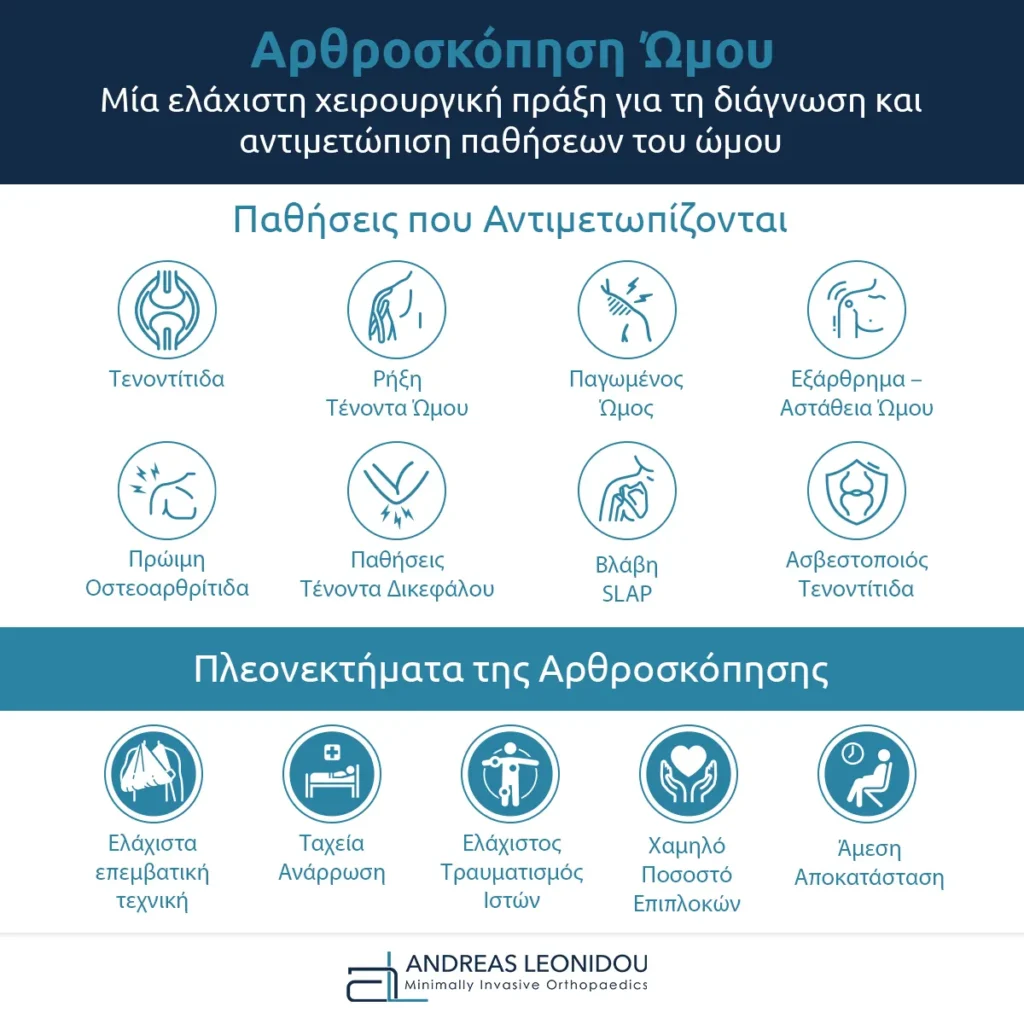
The most common shoulder conditions treated arthroscopically are:

What Are the Advantages of Shoulder Arthroscopy?
Improved visibility of the joint
Much lower complication rates compared to open procedures
Minimal tissue damage and therefore reduced postoperative pain
Faster patient recovery
Faster return to work and daily activities
Excellent cosmetic result
No need for hospitalisation
Preoperative Preparation
The patient will be informed about the proposed arthroscopic treatment for their shoulder condition, as well as the subsequent rehabilitation process. The anaesthesiologist will examine the patient, take a detailed medical history, and organise the preoperative assessment.
The preoperative assessment includes routine blood tests, a chest X-ray, and a cardiological evaluation. The anaesthesiologist will provide the necessary instructions regarding the use or discontinuation of medications before surgery, as well as when the patient should begin fasting.
Hospital Admission – Anaesthesia
The patient is admitted to the hospital on the day of surgery. They may choose either general anaesthesia or to remain awake (awake shoulder surgery).
Shoulder arthroscopy with the patient awake is performed for the first time in Greece by our team. More specifically, the specialised anaesthesiologist administers regional anaesthesia and the patient remains awake throughout the procedure.
The advantage of regional anaesthesia is that the patient experiences no postoperative pain. The patient is discharged from the hospital on the same day.
Procedure
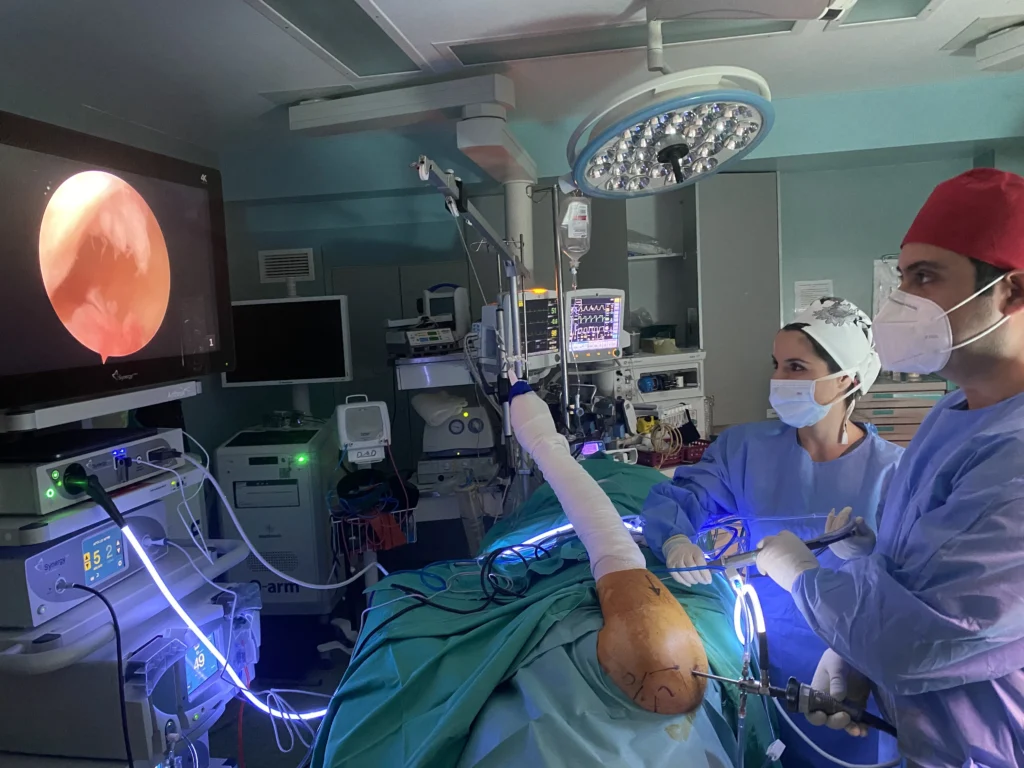
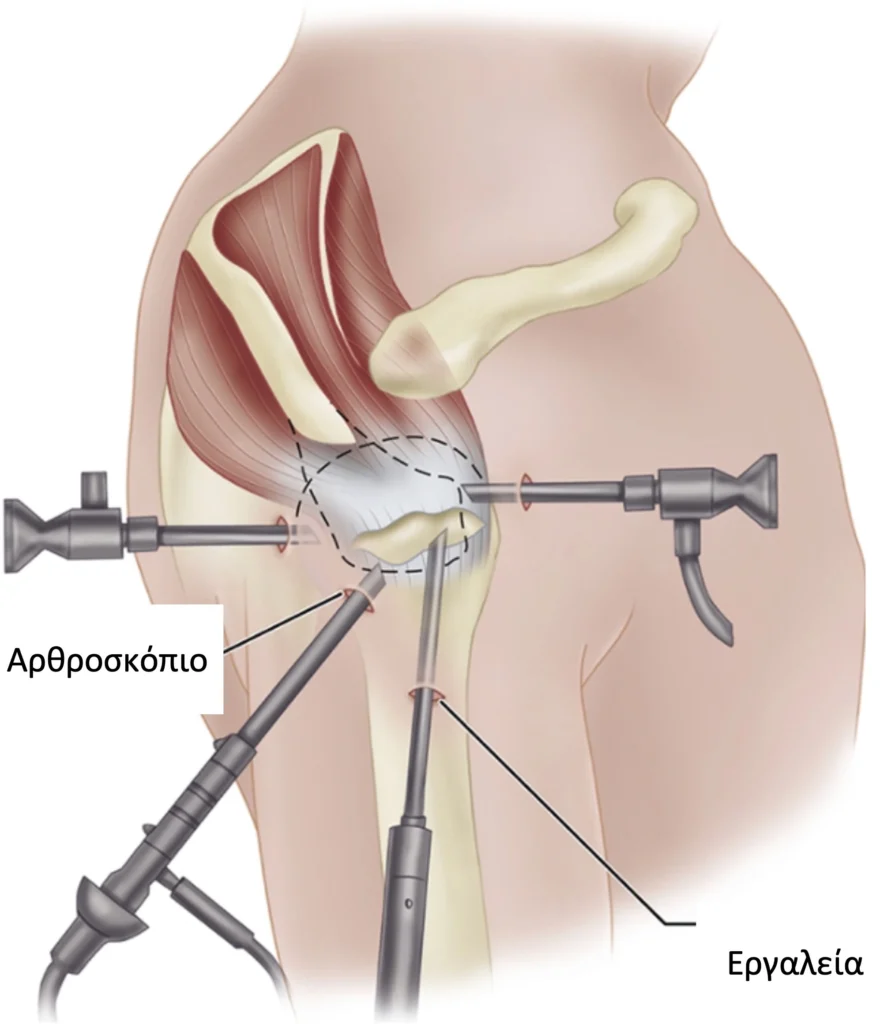
Dr Leonidou will make 2 small incisions (4 millimetres in length) on the front and back of the shoulder. A high-resolution microscopic camera, the arthroscope, is inserted into the shoulder and connected to a cold light source and a monitor.
Through the monitor, Dr Leonidou views the inside of the shoulder joint with magnification and high-definition clarity (HD). The shoulder is distended using a saline pump. Through the second incision, the surgeon inserts all the necessary arthroscopic instruments to treat the underlying pathology.
At the end of the procedure, the skin incisions are covered with simple adhesive strips, without stitches. The procedure is recorded on a DVD, which is provided to the patient before discharge.
The duration of the procedure depends on the underlying shoulder condition and usually ranges from 20 minutes to one hour.
Recovery – Rehabilitation & Recovery Time After Arthroscopy
Before discharge from the hospital, the patient will discuss in detail with Dr Leonidou the surgical findings and will receive the relevant booklet with postoperative instructions.
After the procedure, the patient wears a sling. The duration of sling use varies depending on the surgical findings and the severity of the injuries that were repaired.
During the first days after arthroscopy, ice therapy at home is recommended. Postoperatively, there is usually no pain, and simple oral painkillers are provided as a precaution.
Exercises After Shoulder Arthroscopy
After surgery, the patient will be monitored by a physiotherapist from our team, following an individualised rehabilitation protocol.
The exercises are initially passive, then active-assisted, and finally active with resistance. The goal of physiotherapy and the home exercise programme is to strengthen the shoulder and restore the full range of motion.
Proper rehabilitation leads to rapid and successful recovery.
Success Rate of Shoulder Arthroscopy
Shoulder arthroscopy is a demanding surgical procedure and requires a specialised surgeon with a high volume of cases. In experienced hands, it provides excellent results both in eliminating pain and in the complete functional recovery of the patient. It is a safe and bloodless technique with extremely low complication rates.
What Is the Cost and Price? How Much Does the Surgery Cost?
The cost is quite affordable and depends on the complexity of the patient’s condition and the specialised materials required. The cost of the procedure includes the arthroscopic materials, hospital stay expenses, and the fee of the surgical team.
There is also participation from the patient’s insurance fund (EOPYY). Patients with private insurance are covered according to the terms of their insurance policy.
For more information, please contact us.
If you also suffer from a shoulder condition, consult the specialised Orthopaedic Surgeon Dr Andreas Leonidou. The doctor has 14 years of continuous experience abroad and specialises in shoulder arthroscopy.
Frequently Asked Questions (FAQs)
What Is Shoulder Arthroscopy?
Shoulder arthroscopy is a minimally invasive surgical technique used for the diagnosis and treatment of conditions affecting the shoulder joint. Through small incisions, a camera and specialised instruments are inserted to repair the injury with precision and safety.
What Are the Advantages of Shoulder Arthroscopy?
It offers a lower risk of complications, faster recovery, and a better cosmetic result. It does not require hospitalisation, and patients do not experience postoperative pain.
How Long Is the Recovery Time After Shoulder Arthroscopy?
Recovery time varies depending on the extent of the injury, but it usually ranges from 1 to 6 weeks. Full return to intense activity ranges from 1 to 3 months.
Is Physiotherapy Necessary After Shoulder Arthroscopy?
Yes, physiotherapy is crucial for successful rehabilitation and restoration of mobility. It usually begins a few days after the procedure, with a programme adapted according to the patient’s condition.
Are There Any Complications After Shoulder Arthroscopy?
Complications are rare (less than 4%) but may include local infection, stiffness, or persistent pain. The surgeon’s expertise and proper postoperative care significantly reduce the risk of complications.
How Long Does It Take for Full Recovery After Shoulder Arthroscopy?
Full recovery depends on the nature of the injury and the patient’s adherence to the rehabilitation programme. It is usually achieved within 2–4 months.
Which Exercises Are Recommended After Shoulder Arthroscopy?
The exercises initially focus on gentle stretching and active-assisted movements. Subsequently, active movements, strengthening, and functional rehabilitation are added, always under the guidance of the physiotherapist.
Will I Feel Pain After Shoulder Arthroscopy?
Mild pain and discomfort are expected during the first few days, but they are fully managed with ice therapy and simple analgesics. Pain gradually decreases as rehabilitation progresses.
Book your appointment for immediate diagnosis, specialist care, and targeted treatment in just one visit.