


Hip Fracture
Andreas Leonidou
Orthopaedic Surgeon
56 Kifisias Ave. & Delfon St.,
Marousi, 15125
- Marousi
- Conservative Treatment
- Surgical Treatment
- Cost
Book Appointment
What Is a Hip Fracture?
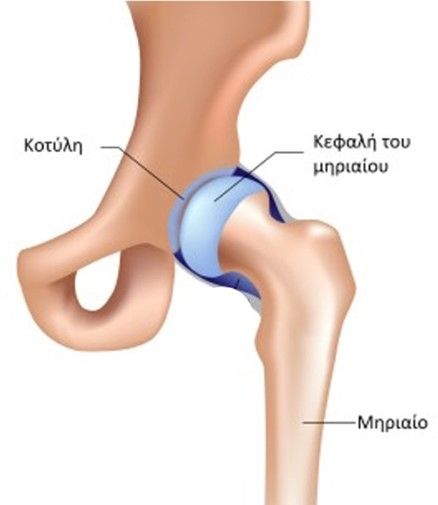
A hip fracture (break – crack), also known as a hip break, is a very common orthopaedic condition. The hip is one of the largest joints in the body and consists of the femur, the femoral head, and the acetabulum (the socket where the femoral head articulates).
A hip fracture is a break in the upper part of the femur. It usually occurs in older individuals due to osteoporosis and as a result of a fall, typically from standing height.
A hip fracture can also occur in younger individuals following a high-energy injury (such as a road traffic accident).
What Are the Symptoms of a Hip Fracture?
The symptoms of a hip fracture tend to be quite noticeable and may include:
Severe pain, especially on the outer surface of the hip and in the groin area
The patient is unable to walk or move the fractured hip
Bruising
Weakness of the limb
Deformity of the leg, which appears shorter and rotated outward
How Is a Hip Fracture Diagnosed?
After discussing your medical history, symptoms, and the way in which the injury occurred, the Orthopaedic Surgeon will clinically examine your leg. If the doctor suspects a hip fracture, they will proceed with additional imaging tests (X-ray or CT scan) to provide more information regarding your injury.
Hip Fracture – Treatment – Management – Rehabilitation
A hip fracture is generally treated surgically and relatively soon after the injury. It has been proven that early surgical treatment of a hip fracture leads to better and faster outcomes, as well as lower rates of postoperative complications.
The goal is for the patient to become mobile quickly and not remain bedridden, due to the well-known risks associated with prolonged bed rest (pneumonia, infections, thrombosis, pressure ulcers). The surgical treatment of a hip fracture depends on the location of the fracture (subcapital, intertrochanteric, subtrochanteric).
Subcapital Hip Fracture – What Is It?
It is a fracture of the femoral neck and is intra-articular. As a result of this fracture, the blood supply to the femoral head is disrupted. In younger patients and in non-displaced fractures, fixation of the bone with screws is preferred. In displaced fractures in older patients, replacement of the fractured hip is performed either with hemiarthroplasty (only the femoral head is replaced) or with total hip arthroplasty (both the femoral head and the acetabulum are replaced).
Intertrochanteric Hip Fracture – What Is It?
On the outer surface of the femur, there is a bony prominence called the greater trochanter. Lower down and on the inner side, there is a smaller bony prominence called the lesser trochanter. The trochanters are the points where the thigh and hip muscles attach.
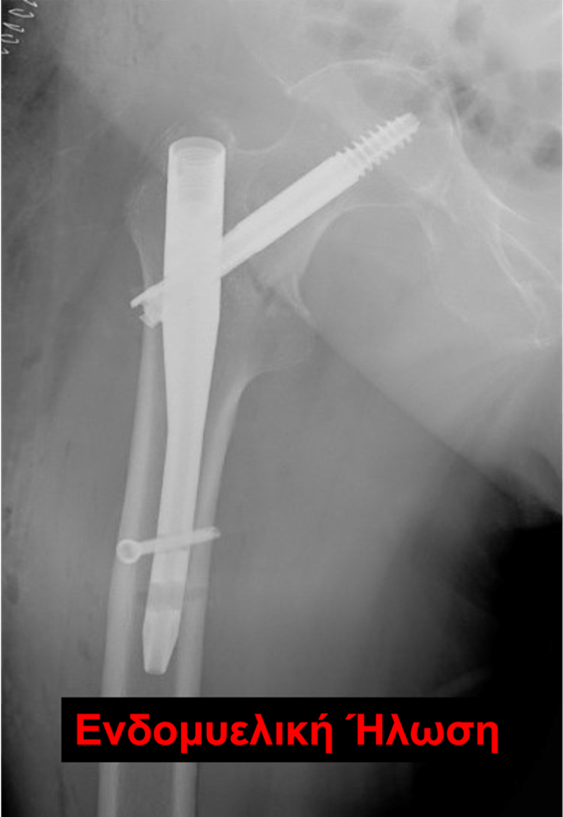
An intertrochanteric fracture occurs in the area between the greater and lesser trochanter and is an extra-articular fracture. Most intertrochanteric fractures are treated with an intramedullary nail, which is inserted inside the bone marrow through a small 2-centimetre incision in the hip using minimally invasive techniques. Subsequently, a screw is placed through the nail, allowing stabilisation of the fracture.
Subtrochanteric Hip Fracture
It is the fracture that occurs below the lesser trochanter and is an extra-articular fracture. Subtrochanteric fractures are treated with intramedullary nailing.
Hip Fracture – Anaesthesia During Surgery
Anaesthesia is usually regional (spinal or epidural) with or without sedation. The specialised anaesthesiologist additionally administers an ultrasound-guided nerve block in the hip area in order to minimise postoperative pain.
Recovery and Rehabilitation After Surgery – Hip Fracture Procedure
The goal of surgical treatment of a hip fracture is for the patient to get out of bed and walk. Minimally invasive techniques combined with rapid recovery protocols (Fast Track – Enhanced Recovery) allow immediate mobilisation of the patient within a few hours after surgery.
The patient sits in an armchair from the first day and can walk with a walking frame or crutches. Full weight-bearing is encouraged, along with gradual removal of walking aids. Most patients walk without support 3–6 weeks after surgery, depending also on their preoperative general health condition.
Patients are discharged from the hospital once they are stable, usually one or two days after surgery. Postoperatively, anticoagulant treatment and anti-thrombotic compression stockings are required for one month. Painkillers are only needed if pain is present.
Exercises After Surgery
Under the supervision of the physiotherapist and guidance of the doctor, the most common exercises for rehabilitation after a hip fracture include: isometric knee and hip exercises, flexion and extension exercises, stretching, quadriceps strengthening, and core and back exercises.
Surgeon’s Experience
The surgeon’s experience, combined with minimally invasive techniques and rapid recovery protocols (Fast Track), significantly reduces postoperative complications, the need for blood transfusion, and postoperative pain.
What Is the Cost of Surgery? How Much Does the Procedure Cost?
The cost is quite affordable and depends on the complexity of the patient’s condition and the specialised materials that need to be used. For more information regarding the procedure and the cost of surgery, you can contact us.
If you have sustained a hip fracture, contact the specialised Orthopaedic Surgeon Dr Andreas Leonidou.
Book your appointment for immediate diagnosis, specialist care, and targeted treatment in just one visit.