


Stem Cells in the Shoulder and Knee
Andreas Leonidou
Orthopaedic Surgeon
- Symptoms
- Conservative Treatment
- Surgical Treatment
- Cost
Book Appointment
Stem cells are one of the most advanced biological (orthobiological) methods used in orthopaedics, aiming to enhance the body’s natural ability to heal. Stem cell therapy is applied in selected cases and always after a comprehensive clinical and imaging evaluation.
The main applications include relieving the symptoms of early arthritis in the shoulder and knee, as well as their complementary use during surgical repair of a shoulder tendon tear to support healing.
It is important to clarify from the beginning that stem cells are not a miraculous or universal solution. They represent a targeted, autologous therapy that, in appropriate cases, may reduce pain, improve functionality, and support recovery. The decision on whether this treatment is suitable for you is always made on an i
What Are Stem Cells and How Do They Work?
Stem cells are primitive cells of the body with the ability to multiply and differentiate into various types of tissue. In orthopaedics, autologous adult mesenchymal cells are used, meaning cells that are derived from the patient’s own body. Because they are autologous, the risk of rejection or allergic reaction is minimal.
These cells are usually obtained from:
the bone marrow, through aspiration and concentration,
adipose tissue, through the collection of a small amount of fat.
Their role is not simply to replace damaged tissue. They mainly act by regulating inflammation and releasing factors that improve the biological environment of the joint or tendon, thereby enhancing the body’s natural healing process. Together with PRP and hyaluronic acid, they belong to the family of biological therapies.
Stem Cells in the Knee for Symptoms of Early Arthritis
In early knee arthritis (osteoarthritis), cartilage begins to deteriorate and symptoms such as pain, stiffness, and limitations in daily activities appear. The injection of stem cells into the joint aims to reduce inflammation, relieve pain, and improve function, allowing the patient to delay or avoid more invasive solutions.
The data available to date is encouraging, but remains limited and under continuous study. Some patients experience significant improvement, while in others the benefit is smaller. The method provides the best results in the early stages of arthritis. In advanced degeneration, where arthroplasty is indicated, stem cells cannot regenerate the damaged joint and do not replace surgical treatment.
Stem Cells in the Shoulder for Symptoms of Early Arthritis
Similarly, in early shoulder arthritis, stem cell injections may help reduce pain and improve mobility. The shoulder is a joint with a wide range of motion, and pain caused by arthritis can significantly affect daily life.
As with the knee, the goal is symptom relief and support of function in the early stages, not reversal of advanced damage. The suitability of the method is determined after clinical examination and imaging assessment.
Stem Cells as a Supplement During Shoulder Tendon Tear Repair
A rotator cuff tear (shoulder tendon tear) is often treated with arthroscopic repair. One of the challenges of this procedure is tendon healing to the bone, particularly in patients with factors that make healing more difficult, such as age, the size or chronicity of the tear, and tissue quality.
In selected cases, stem cells can be applied as an adjunct during repair, at the tendon–bone interface, with the aim of enhancing the biological environment for healing. Early studies suggest that this approach may support healing and functional recovery, with a good safety profile. However, it remains a complementary method: it does not replace proper surgical technique or the rehabilitation programme that follows, and its application is decided individually for each patient.
How Is Stem Cell Therapy Performed?
The treatment is autologous and minimally invasive. The exact procedure depends on the application:
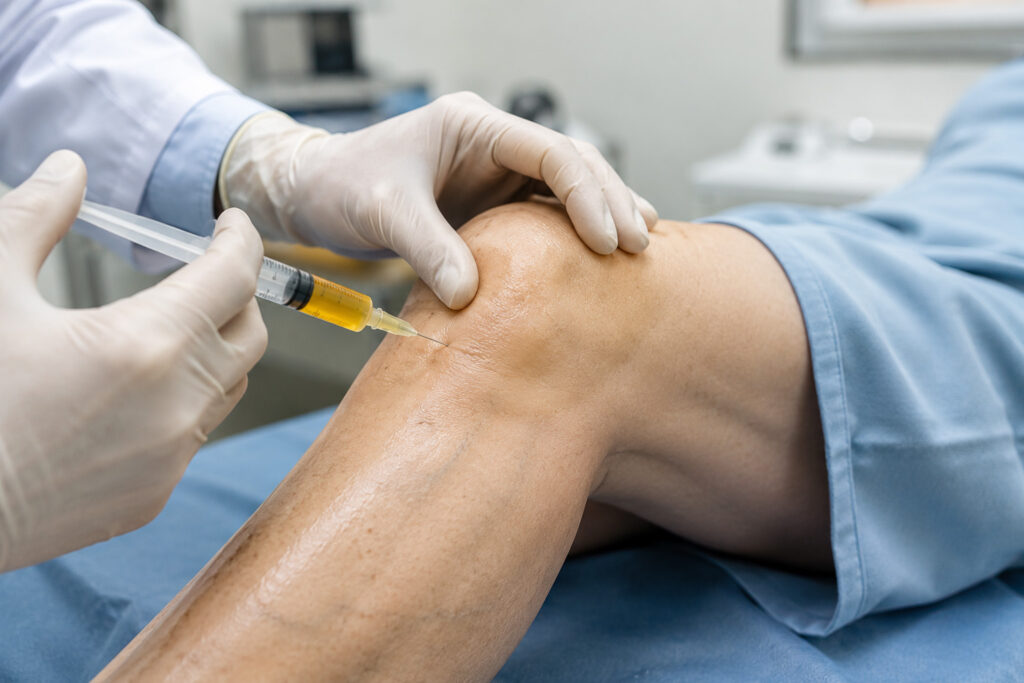
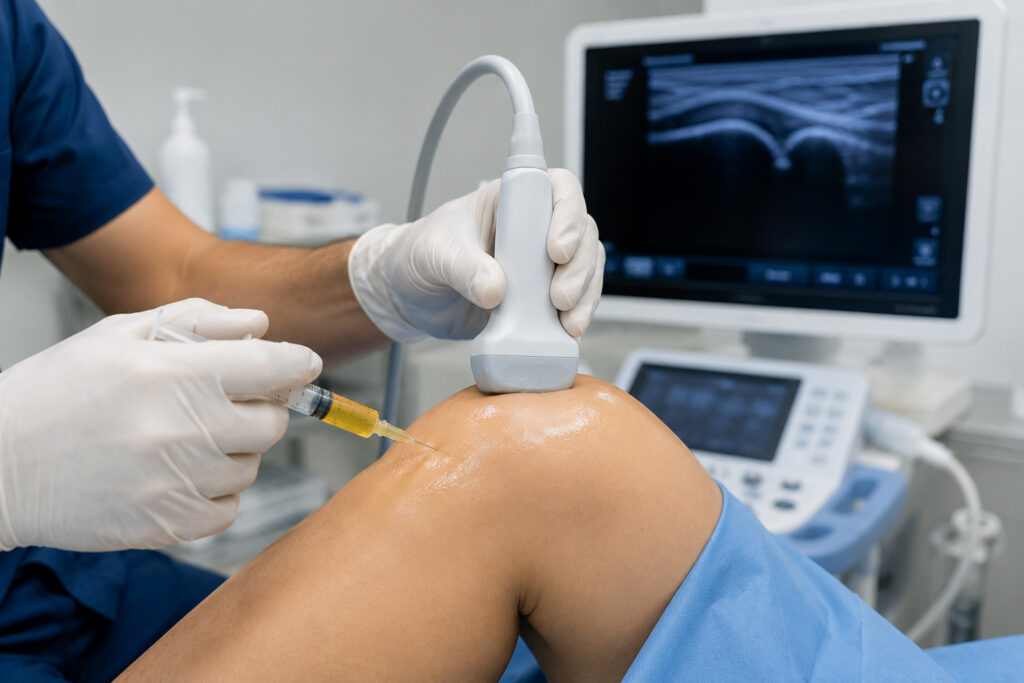
As an injection in the shoulder or knee: A small amount of bone marrow or adipose tissue is collected and immediately processed to concentrate the cells. The preparation is then injected into the affected area, often with ultrasound guidance for greater accuracy. The procedure is performed in a clinic or day-care setting, under local anaesthesia, without hospital admission.
As a supplement during surgical repair: The cells are applied during the arthroscopic procedure at the repair site.
After injection, relative unloading of the area is recommended for a few days and, where needed, combined with physiotherapy and activity modification.
Which Patients Are Suitable Candidates?
Stem cell therapy is not suitable for everyone. Patients who may benefit include:
Patients with symptoms of early arthritis in the shoulder or knee.
Patients wishing to delay or avoid a more invasive treatment, where this is possible.
Patients with a shoulder tendon tear undergoing surgical repair and with factors that may impair healing.
Conversely, the method is not indicated for advanced arthritis where arthroplasty is required, active infection, or certain specific health conditions. The final decision is always made on an individual basis after clinical examination and imaging assessment.
Safety and Possible Side Effects
Because stem cells are obtained from the patient’s own body, the method has a very good safety profile, with minimal risk of allergy or rejection. The most common side effects are temporary and mild, such as local pain or swelling at the application site for a few days. Serious complications are rare. As with any medical procedure, the doctor will provide detailed information about the benefits and potential risks before treatment.
What to Expect – Realistic Expectations
When improvement occurs, it is usually gradual and appears over several weeks. Results vary between patients and depend on the type and stage of the condition. A realistic goal is relief of symptoms, improvement of function, and, in the case of arthritis, delaying progression, rather than complete regeneration of a worn joint. The best results occur when treatment is incorporated into a comprehensive plan combined with appropriate rehabilitation.
Stem Cells, PRP, and Hyaluronic Acid
These three methods belong to biological therapies, but they work differently:
PRP (platelet-rich plasma) uses growth factors derived from the patient’s blood.
Hyaluronic acid improves joint lubrication and protection.
Stem cells represent a cellular approach aimed at regulating inflammation and supporting healing.
No single method is universally the best. The appropriate choice, or combination of treatments, depends on the condition, its stage, and the characteristics of each patient.
Are Stem Cells Safe?
Yes. Since this is an autologous therapy, using cells from the patient’s own body, the risk of allergy or rejection is minimal. Side effects are usually mild and
Does the procedure hurt and do I need hospitalisation?
The injection is performed under local anaesthesia, in a clinic or day-care setting, without the need for hospitalisation. Discomfort is usually minimal.
How long will it take to see results?
Improvement is usually gradual and appears over several weeks, while it varies from patient to patient.
When can I return to my activities?
After an injection, relative unloading of the area is usually recommended for a few days before gradually returning to daily activities. When stem cells are used as a supplement during surgery, the recovery time is mainly determined by the surgery itself and the physiotherapy programme.
How long does the effect last and are repeat treatments needed?
The duration of the effect varies depending on the condition, its stage, and each individual patient. In some cases, repeat treatment or combination with other therapies may be required, which is evaluated during follow-up.
Can Stem Cells Treat Arthritis or Regenerate Cartilage?
No. Their goal is to relieve symptoms and support functionality, mainly in the early stages. They do not restore a joint with advanced degeneration and do not replace arthroplasty when it is indicated.
What Is the Difference Compared to PRP?
PRP uses growth factors derived from blood, while stem cells represent a cellular approach. They often work as complementary treatments.
Can I combine them with shoulder surgery?
In selected cases of tendon tears, stem cells are applied as a complementary treatment during arthroscopic repair to support healing.
Where Are Stem Cells Obtained From?
Usually from the bone marrow or adipose tissue of the same patient.
How Much Does Stem Cell Therapy Cost?
The cost depends on the area being treated, the technique and materials used, as well as whether the treatment is performed as a standalone procedure or as a supplement to a surgical intervention. For an accurate, personalised assessment, please contact the clinic.
Am I a Suitable Candidate?
This is determined on an individual basis, after clinical examination and imaging evaluation.
Book your appointment for immediate diagnosis, specialist care, and targeted treatment in just one visit.